
The Future of Esports Facility Design USA: Trends Shaping Competitive Gaming Spaces

How do you design a physical space for a completely digital revolution? As competitive gaming evolves from a niche hobby into a multi-billion-dollar global industry, the environments supporting it must adapt. In the United States, building a gaming venue is no longer just about arranging desks and plugging in extension cords. It requires an understanding of crowd psychology, technical architecture, and spatial flexibility. For startup gaming center owners, university administrators, investors, and designers across the country, building a successful space demands a forward-thinking layout that balances performance with an unforgettable user experience.
The Evolution of the Competitive Gaming Environment
The days of dark, cramped basement LAN centers are over. Modern competitive gaming demands highly specialized architectural planning. Today's commercial venues operate similarly to traditional sports arenas, yet they carry a vastly different set of infrastructure requirements.
Achieving a high-performing layout means moving away from generic commercial office setups.
Design firms and venue stakeholders are shifting toward a strategic three-phase approach:
Strategic Visioning & Spatial Mapping: Charting player flow and sightlines before construction begins to avoid operational bottlenecks.
Precision Floor Plans: Designing layouts that balance high-density player pods with open pathways for spectators.
Technical Annotation: Coordinating with structural engineers to handle massive electrical, data, and cooling demands.
A successful layout is far more than an arrangement of furniture; it is a carefully crafted user journey. Focusing on maximizing revenue per square foot means placing competitive stations, retail spaces, and food services where they perform best. This strategic spatial engineering gives venue owners a powerful advantage long before a single wall is built.
Key Trends Shaping Modern Esports Architecture
Designing a world-class gaming environment requires a deep dive into technical integration, modularity, and immersive interior styling. For those planning new builds in the United States, several major design trends have emerged as standard requirements.

1. Modular and Scalable Layouts
A major challenge in esports arena design usa is adaptability. A venue might host an open-bracket Rocket League tournament on Friday, an intimate collegiate league night on Saturday, and a corporate digital training seminar on Monday. Heavy, fixed furniture limits a venue's earning potential. Modern facilities utilize modular pod systems, mobile acoustic partitions, and multi-purpose broadcast desks to allow the space to scale up or down within hours.
2. Immersive "RGB" Environments and Atmospheric Psychology
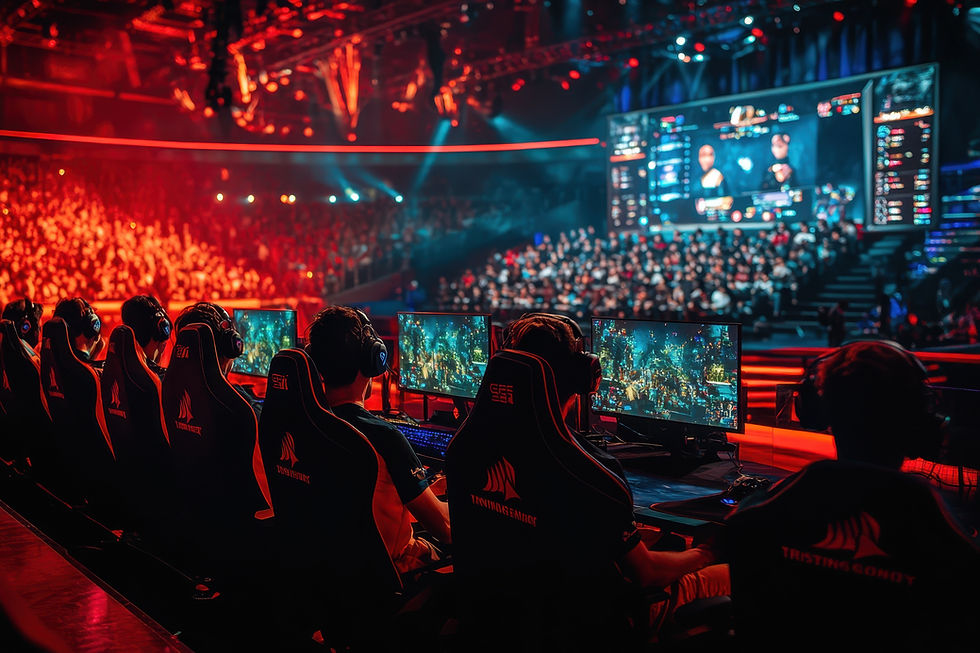
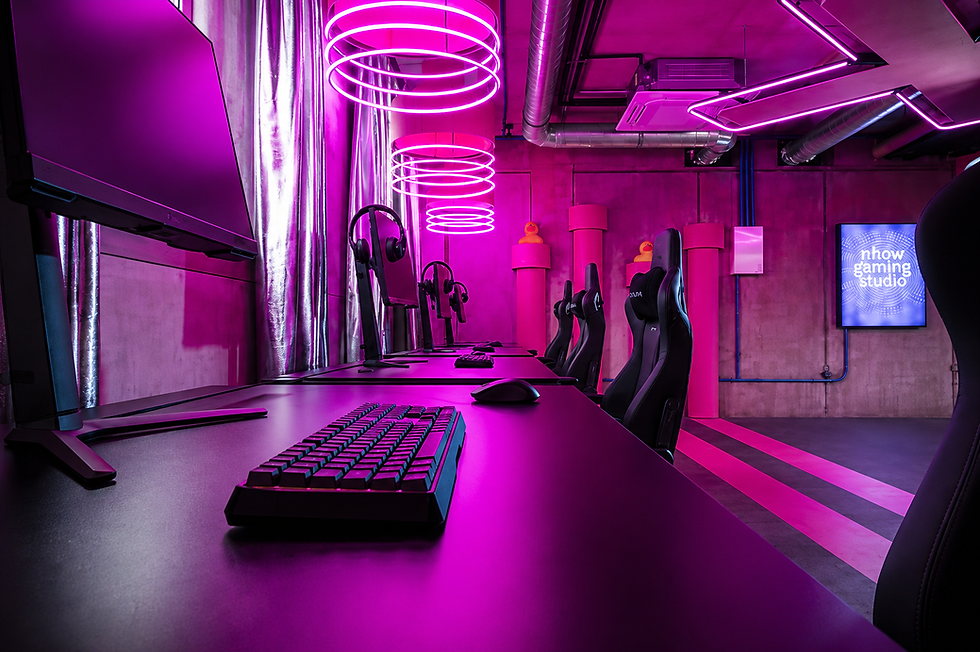
Lighting is the architectural bridge between the physical room and the virtual game world. Progressive spaces use fully programmable RGB LED installations integrated directly into the walls, ceilings, and furniture. This goes beyond aesthetic flair; synchronized ambient lighting matches the colors of competing teams or mirrors in-game events, drawing spectators and players into a shared, high-energy ecosystem.
3. Integrated Broadcast Studios and Spectator Zones
An arena cannot survive on player stations alone. High-tier esports facility design usa projects dedicate substantial square footage to premium spectator seating, massive LED video walls, and custom-built production booths. Clean sightlines and integrated shoutcaster platforms ensure that the live crowd remains as engaged as the audiences watching from home.
Technical Infrastructure and Turnkey Solutions
Behind the glowing screens lies a massive network of data cabling, power management systems, and climate control units. Professional esports facility construction usa projects demand unique mechanical, electrical, and plumbing (MEP) engineering standards. A standard commercial office space is simply not built to handle thirty high-end gaming rigs, multi-layered server racks, and broadcast equipment running concurrently without tripping breakers or overheating.
Infrastructure Layer | Standard Commercial Requirement | Esports Facility Requirement |
Power Supply | Basic localized circuits | Dedicated, isolated power loops with UPS backup systems |
Cooling & HVAC | Standard ambient climate control | High-zone CFM ventilation to offset immense hardware heat |
Data Networking | Standard Wi-Fi / Category 5 cabling | Fiber optic backbones, Cat6A shielding, and low-latency switches |
Acoustics | Basic drywall isolation | Sound-dampening panels, baffle ceilings, and isolated audio zones |
Because navigating these complex requirements can overwhelm startup owners and university boards, the industry has seen a massive push toward turnkey esports facility construction usa services. Rather than sourcing separate interior designers, AV integrators, furniture manufacturers, and network engineers, developers are opting for comprehensive end-to-end providers. This unified approach eliminates compatibility issues, minimizes costly structural delays, and ensures the venue is competition-ready from day one.
Bridging Education and Competition

The explosion of competitive gaming is not limited to commercial entertainment hubs. Educational institutions across North America are rapidly funding dedicated facilities to recruit top-tier student talent and offer specialized digital media curricula.
When executing esports classroom design usa projects, academic planners must carefully balance competitive performance with instructional functionality. A successful training facility should feature a hybrid layout. One section of the room serves as an active arena for team practices, while an adjacent area features modular desks facing an interactive instructor display. This allows the space to function seamlessly as both a varsity training ground and a daytime classroom for computer science, graphic design, or digital marketing courses.
Maximizing ROI: A Blueprint for Owners and Investors
For investors and venue developers, success rests on long-term financial viability. Designing an arena solely around raw player capacity often limits profitability. To maximize revenue per square foot, facilities should integrate diversified, high-margin monetization zones:
Premium Private Team Rooms: Dedicated spaces available for rent by local high schools, amateur teams, or private parties looking for an elite, distraction-free environment.
Integrated Food, Beverage, and Lounge Spaces: Strategically placed cafe counters and casual console lounges that encourage extended visitor dwell times.
Branded Merchandise & Retail Hubs: Prominent retail kiosks placed at high-traffic entrance and exit points to capture spontaneous fan purchases.
By treating the facility design as an intentional customer journey, owners can establish reliable revenue streams that extend far beyond hourly computer rental fees.
Building Your Competitive Space

The future of gaming infrastructure relies on a balance between heavy-duty technological integration and an electrifying, communal atmosphere. Whether you are an architect drafting blueprints for a regional stadium, an educational administrator building a high-tech training lab, or an entrepreneur launching a localized gaming lounge, the spatial design of your venue dictates its operational success. Partnering with experienced turnkey manufacturers and prioritizing scalable infrastructure ensures your space will remain a centerpiece for competitive play for years to come.
To see a real-world application of modular, high-impact aesthetic setups in competitive gaming environments, you can watch this EBlueGaming Arena Visual Walkthrough. This short clip showcases how an end-to-end, custom-produced "RGB" design moves efficiently from digital floor plans to an installed, competition-ready venue.
Frequently Asked Questions
How do you plan an esports facility design in the USA?
To design a successful facility, you must integrate specialized spatial planning, ergonomic layouts, and modular architecture. The design must balance high-density gaming zones with spacious spectator areas, ensuring optimized player flow and flexible revenue-generating spaces.
What are the spatial requirements for player stations?
A standard professional layout requires 45 to 60 square feet per station. This provides ample room for expansive desks, ergonomic chairs, and unhindered player movement while maintaining ADA-compliant walking paths.
How does furniture choice impact this space?
Using modular, space-saving furniture allows operators to quickly reconfigure rows of desks into team pods, maximizing the utility of the square footage.
How do you optimize an esports venue for spectators?
Spectator areas require clear sightlines to massive, centrally positioned LED video walls, integrated shoutcaster booths, and dynamic lighting that mirrors in-game action to keep the live crowd engaged.
What is the role of acoustic treatment in spectator zones?
Sound-dampening wall panels and baffle ceilings isolate high-decibel crowd noise from the broadcast booth, preventing audio feedback and player distraction.
What are the mechanical and electrical needs for esports facility construction in the USA?
Esports construction demands highly specialized mechanical, electrical, and plumbing (MEP) engineering. Standard commercial infrastructure cannot support the simultaneous power draws and heat outputs generated by dozens of high-performance gaming rigs.
What are the power requirements per gaming station?
Each premium gaming setup requires between 500 to 800 watts of dedicated power. Facilities must utilize isolated electrical loops backed by Uninterruptible Power Supplies (UPS) to prevent system crashes.
How do you protect the facility from total power failure?
By zoning power distribution panels specifically for hardware, backup generators or commercial-grade UPS systems can keep the network alive during a sudden outage.
What HVAC adjustments are needed for a gaming arena?
Because high-end PCs generate immense heat, the facility requires dedicated, high-zone CFM (Cubic Feet per Minute) ventilation systems to continuously cycle hot air out and keep the climate stable.
Where should HVAC vents be placed in a gaming room?
Exhaust vents should be placed directly above high-density PC clusters to pull heat upward, while cool air supply vents are positioned over player seating.
Why should developers use turnkey esports facility construction in the USA?
Turnkey construction provides a unified, end-to-end solution that handles everything from architectural blueprints to IT network deployment. It eliminates the friction of managing multiple separate contractors.
How does a turnkey solution prevent compatibility errors?
A single turnkey provider coordinates the interior design, electrical wiring, and hardware placement simultaneously, ensuring that desks fit perfectly over floor power outlets and data cables match device specifications.
Does turnkey construction reduce project timelines?
Yes, because design and technical integration happen under one roof, the workflow is streamlined, significantly accelerating the venue's grand opening date.
What services are typically included in a turnkey package?
A complete package generally covers spatial floor planning, custom interior branding, RGB atmospheric lighting installation, AV broadcast integration, and enterprise network deployment.
How do you implement an effective esports classroom design in the USA?
An academic esports lab must serve a dual purpose. It needs to function as a varsity training arena for competitive teams and a fully operational multimedia classroom during school hours.
How do you make a gaming lab adaptable for everyday teaching?
By utilizing modular desks and movable acoustic partitions, instructors can transition the space from a team practice layout into a traditional forward-facing classroom setup within minutes.
What technology is needed for the instructor's station?
The main teaching podium should be linked to an interactive display and integrated into the room's central AV switcher, allowing the teacher to broadcast their screen to all student monitors.
How can schools justify the infrastructure investment?
A properly designed lab supports cross-departmental academic programs, including computer science, digital media production, graphic design, and sports management.
How do you prevent lag and network drops in a competitive gaming venue?
Network reliability requires an enterprise-grade fiber optic backbone. Wireless connections are highly susceptible to interference and latency spikes, making wired infrastructure mandatory for competitive play.
What type of cabling is required for an esports network?
Venues must install shielded Cat6A or Cat7 ethernet cabling directly from the main server racks to each individual gaming station to eliminate electromagnetic interference.
Why is cable management important in the overall design?
Securing cables inside dedicated under-desk trays or floor trenches protects the physical data lines from accidental unplugging or wear and tear.
How should network bandwidth be managed?
Network integrators configure managed switches to implement strict Quality of Service (QoS) rules, ensuring competitive gaming traffic is always prioritized over public guest Wi-Fi.

Comments